A human-in-the-loop visual explanation system that bridges machine learning interpretations and human semantic understanding through interactive drag-and-drop clustering.
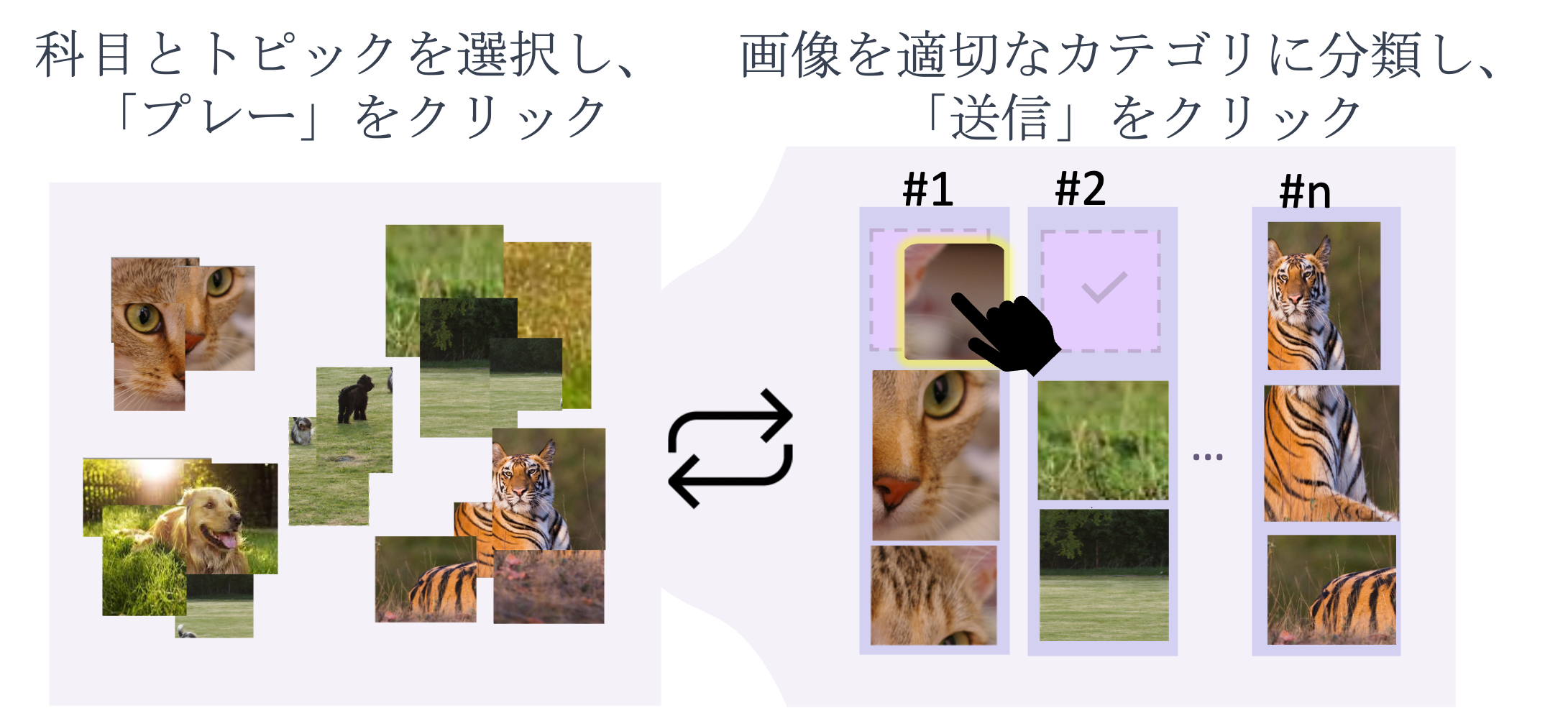
| Step | Action | Output |
|---|---|---|
| 1. Human Input | Users drag-and-drop prototypes into semantic clusters | Grouped prototypes |
| 2. Constraint Generation | System extracts pairwise relationships from user groupings | Must-link & cannot-link constraints |
| 3. Model Update | Constrained clustering algorithm learns from human feedback | Refined prototype clusters |
| 4. Explanation | Model generates interpretable visual explanations | Human-aligned outputs |
- 🎯 Interactive Interface: Drag-and-drop clustering captures human semantic knowledge
- 🔄 Constraint-Based Learning: Converts user interactions into machine-readable constraints
- 📊 Validated Approach: User study demonstrates improved alignment with human perception
This project implements a robust authentication architecture specifically designed for behavioral experiments requiring user login and data persistence. Common use cases:
- Longitudinal studies where participants return across multiple sessions
- Crowdsourcing experiments (e.g., Yahoo! Crowd Sourcing, MTurk) requiring participant tracking
- Interactive tasks generating sensitive behavioral data requiring secure storage
Request Layer (useAxiosPrivate hook)
- Auto-injects JWT tokens via Axios interceptors (no manual header configuration needed)
- AbortController-based request cancellation prevents memory leaks
- Unified error/loading state management
Authentication Flow (RequireAuth component)
- Token validation and automatic redirect on expiration
- localStorage-based session recovery (survives page refresh)
- Flexible routing: unauthenticated users redirected to registration
This authentication layer is designed to be reusable. To adapt for your own study:
- Configure backend API endpoints in
axios.js - Customize registration form fields for your participant metadata
- Modify route protection rules in
RequireAuth.jsif needed
The modular design means you can focus on experiment-specific UI/UX rather than rebuilding authentication infrastructure.