Dynamic generators of complex signals and shapes
The Chain DSL is a compact single-string notation for building signal graphs. A chain is parsed into a set of named nodes and a set of directed connections, which are then used to instantiate a GenGraph.
Chains can be passed directly on the command line, or stored in a .txt or .chain file.
A chain is one or more segments separated by |. Each segment defines nodes and/or connections independently; | is purely a separator with no audio meaning.
White() => noise | LowPass() => lpf | noise -> lpf
A UGen is created by writing its type name, optionally followed by keyword arguments in parentheses. Argument values are numbers, identifiers (for enum variants), or lists.
Clock(rate=120, mode=Bpm)
ParametricConst(gain=6, bw=0.333, freq=1000)
PulseSelect(duration_values=[3, 2, 1], duration_mode=Cycle)
Arguments with defaults can be omitted entirely:
LowPass()           # uses default roll_off_db
White()             # no required args
Any atom can be assigned a name with =>. The name can then be referenced in later segments.
White() => noise | LowPass() => lpf | noise -> lpf
Without =>, auto-generated internal names are used and the node cannot be referenced later.
-> connects the default output of the left node to the default input of the right node.
White() => noise -> LowPass() => lpf -> HighPass() => hpf
Chains of -> are read left to right; each arrow adds one connection.
An optional port spec after -> selects non-default ports. It takes the form src:dst, where either side can be omitted to keep the default.
# named destination port only (default source output)
4000 ->:cutoff lpf

# named source port only (default destination input)
osc ->wave: recorder

# both ports explicit
noise ->out:in lpf
&> connects all outputs of the left node to the first N inputs of the right node in contiguous order. The source must have more than one output (otherwise use -> instead).
Sine() -> Pan() &> Reverb() => rev
# Connects pan.out1 -> rev.in_l and pan.out2 -> rev.in_r
An optional multi-port spec controls which ports are wired. It is a comma-separated list of src_out:dst_in pairs placed between &> and the destination node. Either side of : may be omitted; an omitted output defaults to the n-th contiguous output and an omitted input defaults to the n-th contiguous input.
# fully explicit
pan &>out1:in_l,out2:in_r Reverb()

# omit source outputs (default to first N outputs of pan)
pan &>:in_l,:in_r Reverb()

# omit destination inputs (default to first N inputs of Reverb)
pan &>out1:,out2: Reverb()
Multiple &> operators can be chained:
Sine() -> Pan() &> Reverb() &> Fade(channels=2) => fd
A bare number creates an implicit constant node. This is shorthand for Const(value=…).
440 ->:freq osc # same as: Const(value=440) => c | c ->:freq osc
+ and * wire two nodes into an implicit Sum or Mult node respectively. ^ wires two nodes into an implicit Fade node, connecting the left operand to in1 and the right operand to level. Parentheses control grouping.
(a + b)             # sum of a and b
(a * b)             # product of a and b
(a ^ b)             # fade: a scaled by level b
(a + b) => mix      # name the result
A full mixing example:
Sine() => a | Sine() => b | 330 ->:freq a | 440 ->:freq b | (a + b) => mix
All whitespace — spaces, tabs, newlines — is ignored. Long chains can be split across lines freely:
White() => noise
    -> LowPass() => lpf
    -> HighPass() => hpf
| 4000 ->:cutoff lpf
| 800  ->:cutoff hpf
Filter chain with named cutoff controls:
White(seed=42) => noise -> LowPass() => lpf -> HighPass() => hpf | 4000 ->:cutoff lpf | 800 ->:cutoff hpf
Drum machine driven by a clock and pulse selectors:
Clock(rate=300, mode=Bpm) => metro
| metro -> PulseSelect(duration_values=[3, 2, 3], duration_mode=Cycle) -> BassDrum() => bd
| metro -> PulseSelect(duration_values=[1, 2, 1], duration_mode=Shuffle) -> SnareDrum() => sn
| (bd + sn) => mix
The following UGens are available in the Chain DSL. Each entry lists construction arguments (with defaults), signal inputs (with default values), and signal outputs.
Construction args:
| Arg | Type | Default |
|---|---|---|
mode |
Hz | Seconds | Samples | Midi | Bpm |
Hz |
Inputs:
| Input | Default |
|---|---|
in |
— |
Outputs: out
Inputs:
| Input | Default |
|---|---|
gate |
0 |
tune |
55 |
decay |
9000 |
punch |
2.8 |
sweep_decay |
1200 |
click |
0.2 |
tone |
1 |
drive |
1.3 |
Outputs: out
Inputs:
| Input | Default |
|---|---|
in |
— |
Outputs: out
Construction args:
| Arg | Type | Default |
|---|---|---|
rate |
number | required |
mode |
Hz | Seconds | Samples | Midi | Bpm |
required |
Inputs:
| Input | Default |
|---|---|
in |
1 |
Outputs: out
Construction args:
| Arg | Type | Default |
|---|---|---|
value |
number | required |
Outputs: out
Inputs:
| Input | Default |
|---|---|
trigger |
0 |
attack_dur |
1 |
release_dur |
1 |
attack_curve |
1 |
release_curve |
1 |
Outputs: out
Construction args:
| Arg | Type | Default |
|---|---|---|
duration_values |
[number, ...] | required |
duration_mode |
Cycle | Random | Shuffle | Walk |
required |
level_values |
[number, ...] | required |
level_mode |
Cycle | Random | Shuffle | Walk |
required |
seed |
integer | none |
Inputs:
| Input | Default |
|---|---|
clock |
0 |
step |
1 |
Outputs: out
Construction args:
| Arg | Type | Default |
|---|---|---|
channels |
integer | 1 |
level |
number | 1.0 |
Inputs:
| Input | Default |
|---|---|
in1 |
— |
level |
1 |
Outputs: out1
Inputs:
| Input | Default |
|---|---|
in |
— |
Outputs: out
Construction args:
| Arg | Type | Default |
|---|---|---|
seed |
integer | none |
Inputs:
| Input | Default |
|---|---|
gate |
0 |
tune |
3969 |
decay |
4000 |
tone |
8000 |
accent |
0.8 |
noise |
0.2 |
drive |
1.2 |
Outputs: out
Construction args:
| Arg | Type | Default |
|---|---|---|
roll_off_db |
number | 6.0 |
Inputs:
| Input | Default |
|---|---|
in |
— |
cutoff |
— |
Outputs: out
Construction args:
| Arg | Type | Default |
|---|---|---|
roll_off_db |
number | 6.0 |
Inputs:
| Input | Default |
|---|---|
in |
— |
cutoff |
— |
resonance |
— |
Outputs: out
Construction args:
| Arg | Type | Default |
|---|---|---|
wave |
Sine | Triangle | Square |
required |
rate |
number | 1.0 |
mode |
Hz | Seconds | Samples | Midi | Bpm |
Hz |
duty |
number | 0.5 |
min |
number | 0.0 |
max |
number | 1.0 |
Inputs:
| Input | Default |
|---|---|
rate |
1 |
duty |
0.5 |
min |
0 |
max |
1 |
Outputs: wave
Construction args:
| Arg | Type | Default |
|---|---|---|
roll_off_db |
number | 6.0 |
Inputs:
| Input | Default |
|---|---|
in |
— |
cutoff |
— |
Outputs: out
Construction args:
| Arg | Type | Default |
|---|---|---|
roll_off_db |
number | 6.0 |
Inputs:
| Input | Default |
|---|---|
in |
— |
cutoff |
— |
resonance |
— |
Outputs: out
Construction args:
| Arg | Type | Default |
|---|---|---|
inputs |
integer | 2 |
outputs |
integer | 2 |
Inputs:
| Input | Default |
|---|---|
in1 |
— |
pan1 |
0.5 |
level1 |
1 |
in2 |
— |
pan2 |
0.5 |
level2 |
1 |
Outputs: out1, out2
Construction args:
| Arg | Type | Default |
|---|---|---|
inputs |
integer | 2 |
Inputs:
| Input | Default |
|---|---|
in1 |
— |
in2 |
— |
Outputs: out
Construction args:
| Arg | Type | Default |
|---|---|---|
outputs |
integer | 2 |
pan |
number | 0.5 |
Inputs:
| Input | Default |
|---|---|
in |
— |
pan |
0.5 |
Outputs: out1, out2
Inputs:
| Input | Default |
|---|---|
in |
— |
gain |
— |
bw |
— |
freq |
— |
Outputs: out
Construction args:
| Arg | Type | Default |
|---|---|---|
gain |
number | required |
bw |
number | required |
freq |
number | required |
Inputs:
| Input | Default |
|---|---|
in |
— |
Outputs: out
Construction args:
| Arg | Type | Default |
|---|---|---|
duration_values |
[number, ...] | required |
duration_mode |
Cycle | Random | Shuffle | Walk |
required |
seed |
integer | none |
Inputs:
| Input | Default |
|---|---|
clock |
0 |
step |
1 |
Outputs: out
Inputs:
| Input | Default |
|---|---|
in_l |
0 |
in_r |
0 |
decay |
0.6 |
pre_delay |
20 |
mix |
0.35 |
size |
1 |
diffusion |
0.75 |
damping |
7000 |
Outputs: out_l, out_r
Construction args:
| Arg | Type | Default |
|---|---|---|
places |
integer | 0 |
mode |
Round | Floor | Ceil |
Round |
Inputs:
| Input | Default |
|---|---|
in |
— |
Outputs: out
Construction args:
| Arg | Type | Default |
|---|---|---|
values |
[number, ...] | required |
mode |
Cycle | Random | Shuffle | Walk |
required |
seed |
integer | none |
Inputs:
| Input | Default |
|---|---|
trigger |
0 |
step |
1 |
Outputs: out
Inputs:
| Input | Default |
|---|---|
freq |
440 |
phase |
0 |
min |
-1 |
max |
1 |
Outputs: wave, trigger
Construction args:
| Arg | Type | Default |
|---|---|---|
seed |
integer | none |
Inputs:
| Input | Default |
|---|---|
gate |
0 |
tune |
180 |
tone |
0.7 |
snappy |
0.9 |
tone_decay |
3000 |
snappy_decay |
5000 |
noise_filter |
4000 |
pitch_sweep |
1.5 |
Outputs: out
Construction args:
| Arg | Type | Default |
|---|---|---|
inputs |
integer | 2 |
Inputs:
| Input | Default |
|---|---|
in1 |
— |
in2 |
— |
Outputs: out
Inputs:
| Input | Default |
|---|---|
freq |
1 |
Outputs: out
Construction args:
| Arg | Type | Default |
|---|---|---|
seed |
integer | none |
Inputs:
| Input | Default |
|---|---|
min |
-1 |
max |
1 |
Outputs: out
cargo run --bin ampullator-doccargo run --bin ampullator-record -- "Clock(rate=5, mode=Samples)" -o /tmp/out.wav --duration 2On Linux with aplay it is possible to omit the output path and pipe WAV:
cargo run --bin ampullator-record -- "Sine() => s * .4 | 220 ->:freq s" --duration 4 | aplay

cargo run --bin ampullator-record -- "Clock(rate=300, mode=Bpm) => metro | metro -> PulseSelect(duration_values=[3, 2, 3], duration_mode=Cycle) -> BassDrum() => bd | metro -> PulseSelect(duration_values=[1,2,1], duration_mode=Shuffle)-> SnareDrum() => sn | bd + sn" --duration 8 | aplay
On MacOS with sox play:
cargo run --bin ampullator-record -- "Sine() => s * .4 | 220 ->:freq s" --duration 4 | play -

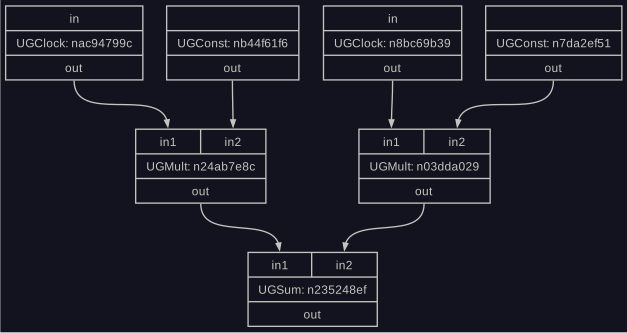
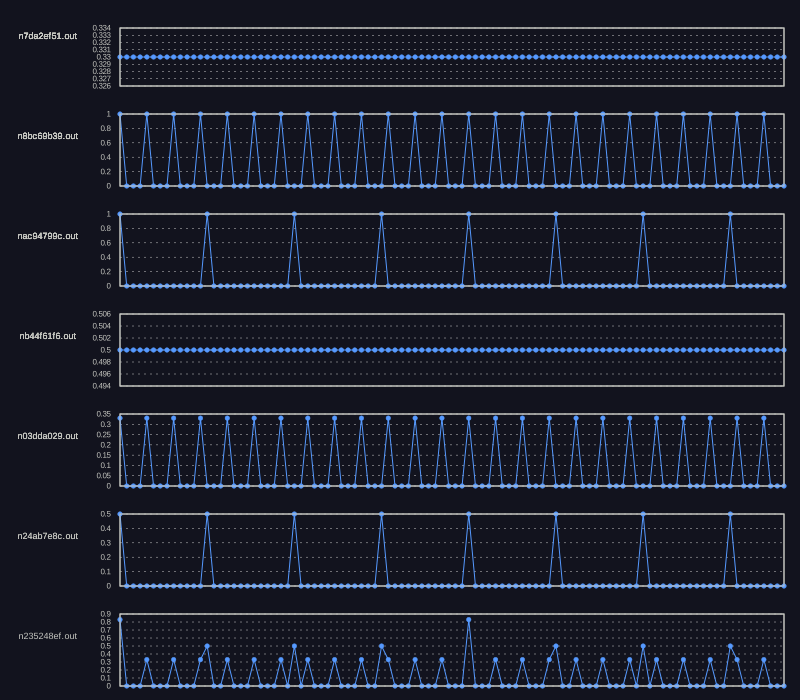
cargo run --bin ampullator-record -- "Clock(rate=300, mode=Bpm) => metro | metro -> PulseSelect(duration_values=[3, 2, 3], duration_mode=Cycle) -> BassDrum() => bd | metro -> PulseSelect(duration_values=[1,2,1], duration_mode=Shuffle)-> SnareDrum() => sn | bd + sn" --duration 8 | play -(Clock(rate=12, mode=Samples) * .5) + (Clock(rate=3, mode=Samples) * .33)
Clock(rate=12, mode=Samples) + Clock(rate=5, mode=Samples)
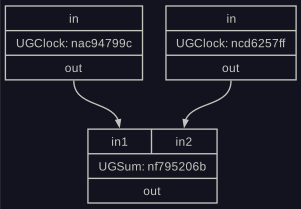
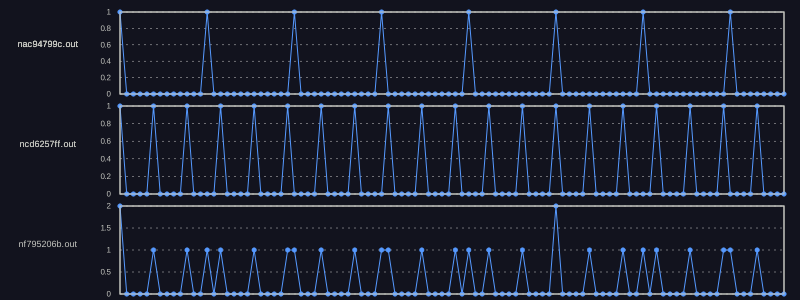
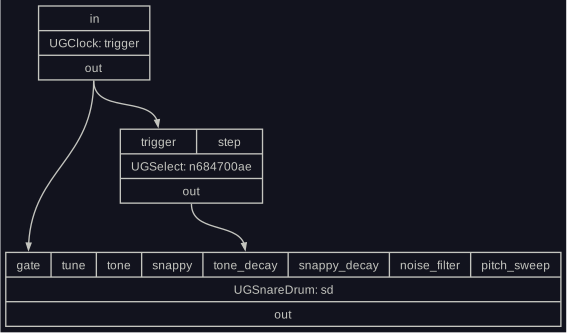
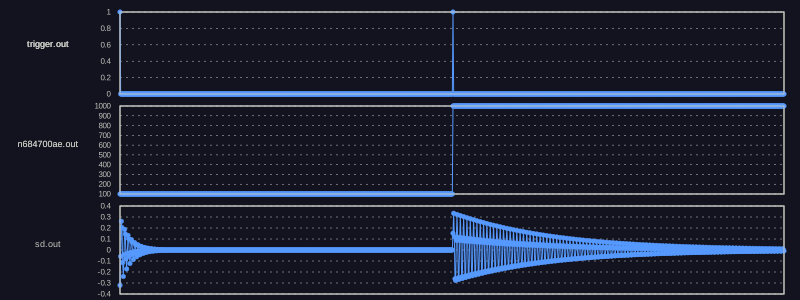
Clock(rate=500, mode=Samples) => trigger -> SnareDrum(seed=42) => sd
| trigger -> Select(values=[100, 1000], mode=Cycle) ->:tone_decay sd
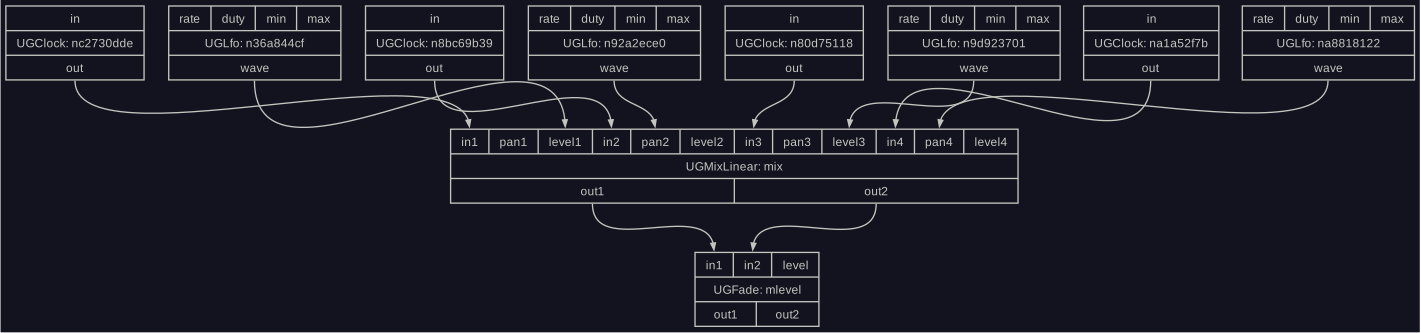
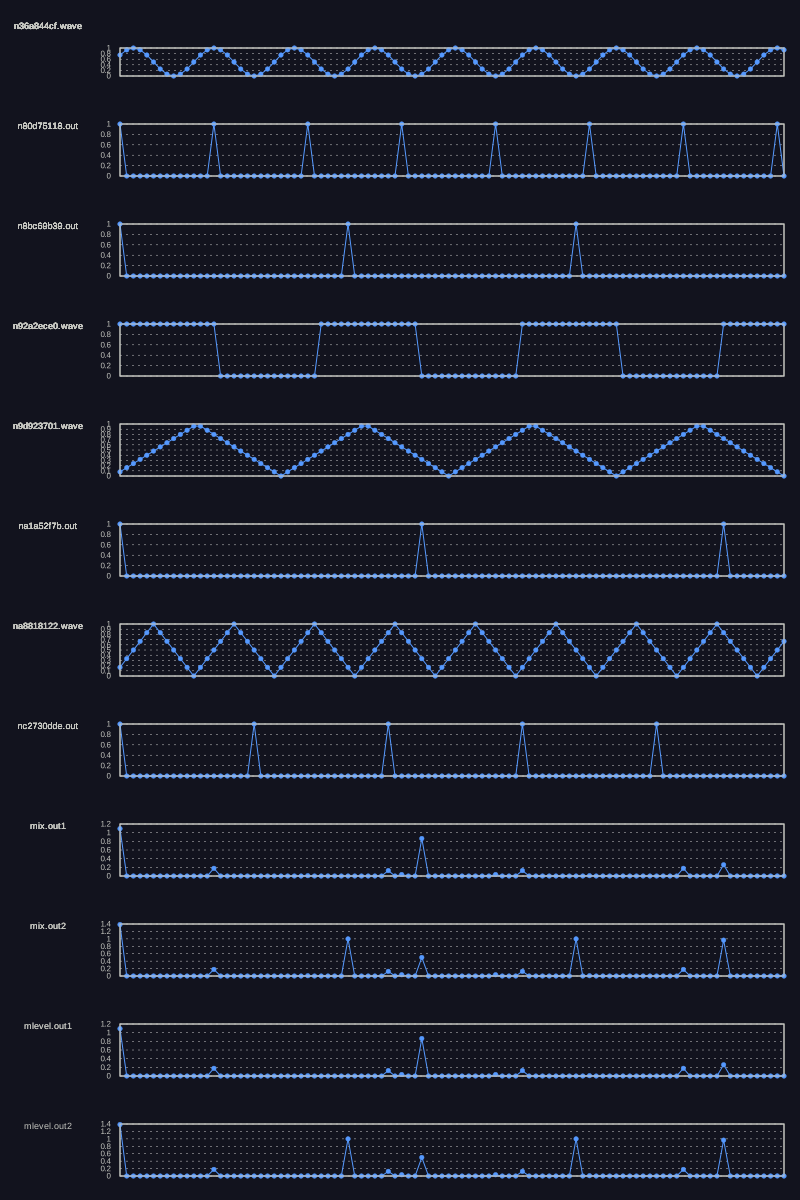
MixLinear(inputs=4, outputs=2) => mix &> Fade(channels=2) => mlevel
| Clock(rate=20, mode=Samples) ->:in1 mix
| Clock(rate=33, mode=Samples) ->:in2 mix
| Clock(rate=13, mode=Samples) ->:in3 mix
| Clock(rate=45, mode=Samples) ->:in4 mix
| Lfo(rate=12, mode=Samples, wave=Sine) ->:level1 mix
| Lfo(rate=30, mode=Samples, wave=Square) ->:pan2 mix
| Lfo(rate=25, mode=Samples, wave=Triangle) ->:level3 mix
| Lfo(rate=12, mode=Samples, wave=Triangle) ->:pan4 mix
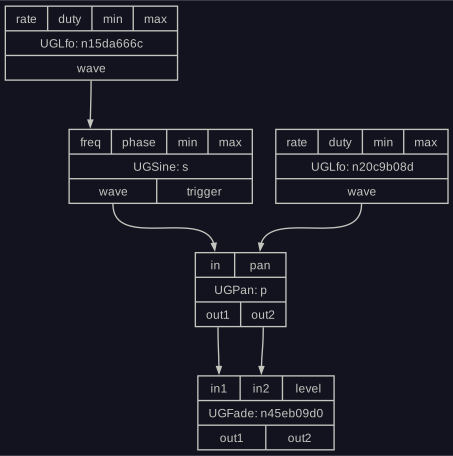
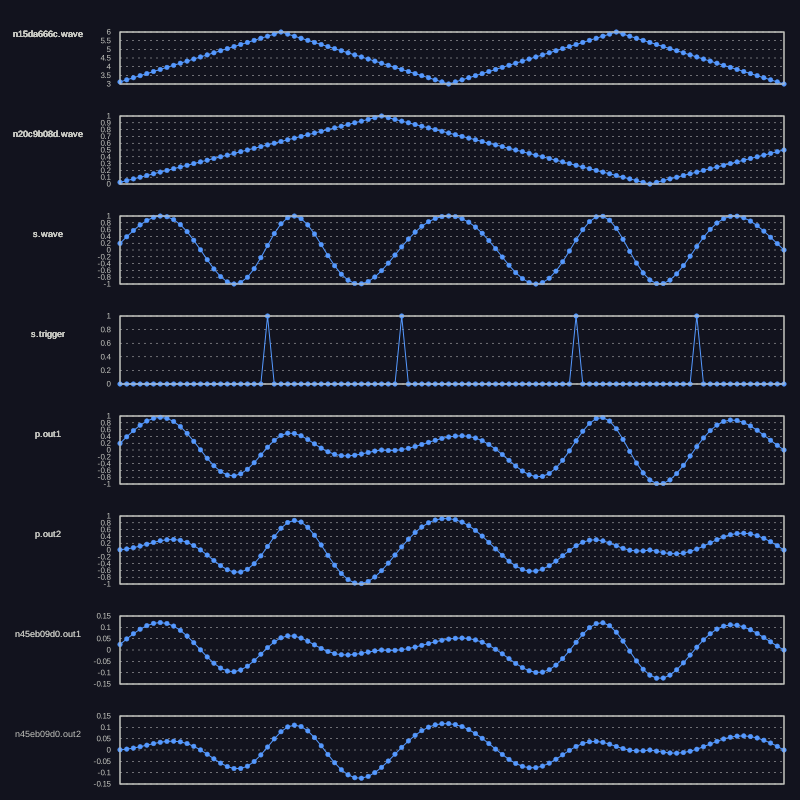
Sine() => s -> Pan() => p &> Fade(channels=2, level=0.7)
| Lfo(rate=50, wave=Triangle, mode=Samples, min=3, max=6) ->:freq s
| Lfo(rate=80, wave=Triangle, mode=Samples) ->:pan p
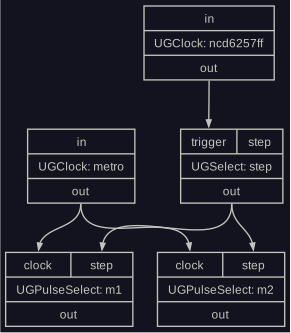
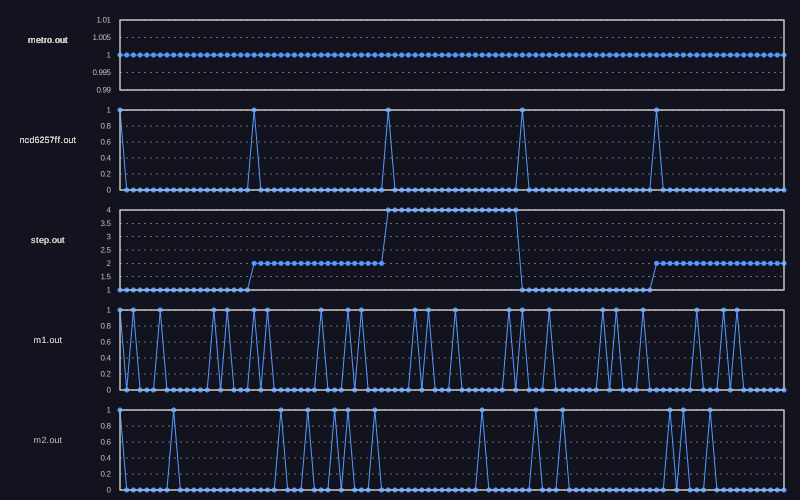
Clock(rate=1, mode=Samples)=> metro
| Clock(rate=20, mode=Samples) -> Select(values=[1, 2, 4], mode=Cycle) => step
| metro -> PulseSelect(duration_values=[2, 4, 8], duration_mode=Cycle) => m1
| step ->:step m1
| metro -> PulseSelect(duration_values=[2, 4, 8, 16], duration_mode=Shuffle, seed=42) => m2
| step ->:step m2
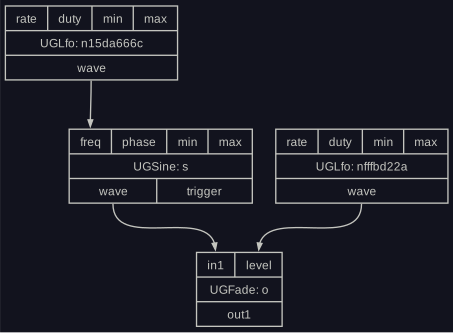
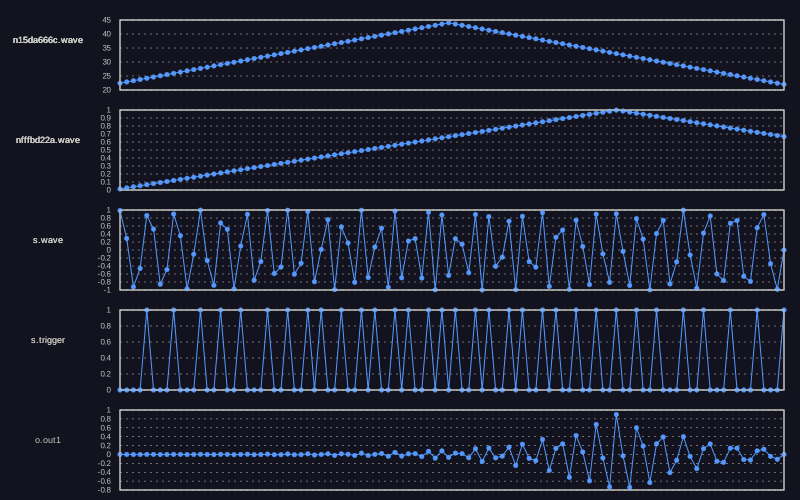
((Sine() => s) ^ Lfo(rate=0.666, wave=Triangle)) => o
| Lfo(wave=Triangle, min=22, max=44) ->:freq s
| o
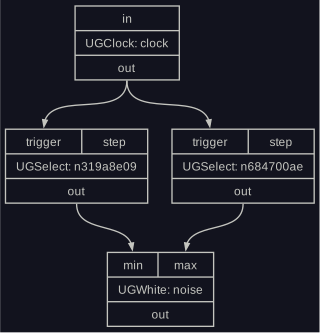
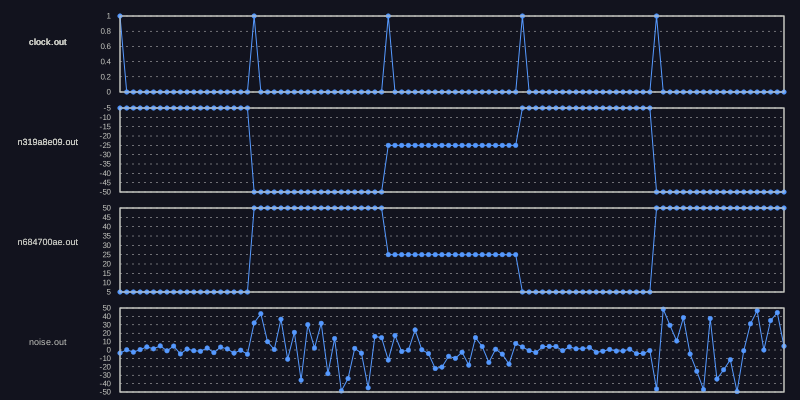
White(seed=42) => noise
| Clock(rate=20, mode=Samples) => clock
| clock -> Select(values=[5, 50, 25], mode=Cycle) ->:max noise
| clock -> Select(values=[-5, -50, -25], mode=Cycle) ->:min noise
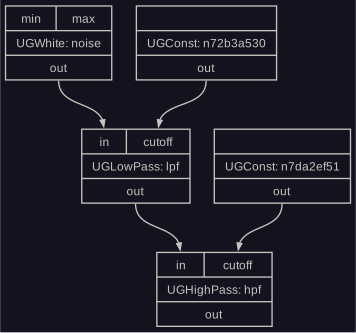
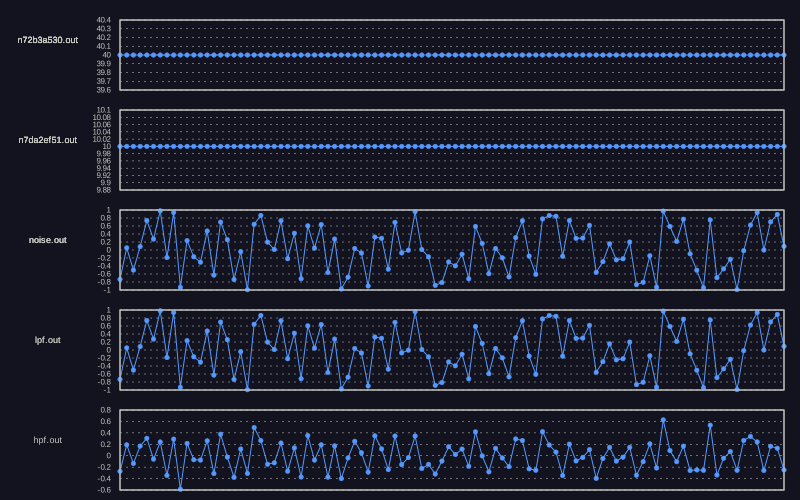
White(seed=42) => noise -> LowPass() => lpf -> HighPass() => hpf
| 40 ->:cutoff lpf
| 10 ->:cutoff hpf